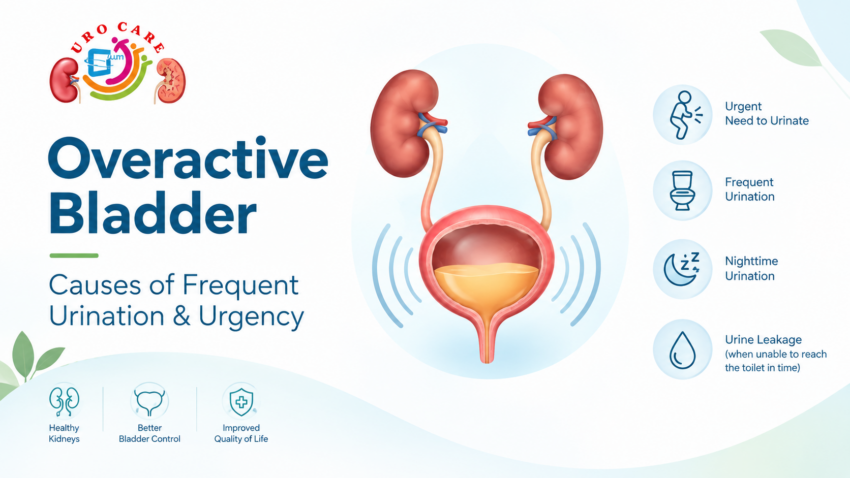
Frequent urination and a sudden, hard-to-control urge to urinate can affect sleep, work, travel, and usual everyday activities. These symptoms may be associated with an overactive bladder (OAB), a condition in which the bladder creates an urgent need to pass urine, sometimes even when it is not completely full.
At Galaxy Superspeciality Clinic, Dr. Swapnil Tople, Consultant Urologist and Andrologist, provides evaluation and treatment for urological conditions, including overactive bladder and urinary incontinence. Patients in Chembur can discuss persistent urinary symptoms and receive an assessment based on their individual medical history.
What Is an Overactive Bladder?
An overactive bladder is commonly associated with urinary urgency, increased frequency, and sometimes urine leakage. Normally, the bladder stores urine until it reaches an appropriate level of fullness before creating the sensation that it is time to urinate. With OAB, involuntary bladder contractions may produce a strong urge to urinate sooner than expected.
Symptoms can occur during the daytime or at night. Some people may experience urge incontinence, where urine leaks because the urge is too sudden to reach the toilet in time. Repeated nighttime urination can also interrupt sleep and affect daily energy levels.
What Causes Frequent Urination and Urgency?
Several factors might contribute to overactive bladder symptoms. These can include urinary tract infections, diabetes, certain medications, hormonal changes, constipation, incomplete bladder emptying, and obstruction of normal urine flow. Certain neurological conditions may also affect communication between the brain and bladder and contribute to bladder-control problems.
Since frequent urination can have several possible causes, it should not automatically be assumed to be OAB. A proper medical evaluation can help distinguish bladder overactivity from infections, prostate-related problems, medication-related effects, or other urinary conditions.
Common Symptoms of Overactive Bladder
Recognising symptoms that reoccur can help you understand when professional evaluation may be useful. Common symptoms include:
- A sudden and strong urge to urinate
- Frequent urination during the day
- Waking repeatedly at night to urinate
- Urine leakage following a sudden urge
- Difficulty delaying urination
- Noticeable changes in usual bladder habits
The extremity of these symptoms can vary from person to person. When they begin interfering with sleep, work, travel, social activities, or everyday comfort, consulting a urologist can help identify the possible cause.
How Is Overactive Bladder Evaluated?
Evaluation generally starts with a detailed discussion about urinary symptoms, how often they occur, how long they have been present, and how they affect daily life. The doctor may also consider existing medical conditions, medications, previous procedures, and other factors that could influence bladder function.
Depending on the symptoms, additional examinations may be recommended. The information provided on the urology consultant page notes that urodynamic testing can assess aspects of bladder function, including urine flow, residual urine, and bladder pressure.
For patients considering Overactive bladder treatment in Chembur, identifying the underlying cause is an important part of creating an appropriate treatment plan.
Treatment Options for Overactive Bladder
Treatment varies according to the patient’s symptoms and underlying condition. Conservative approaches may include lifestyle modifications, timed toilet visits, bladder training, weight management, and pelvic floor exercises. Medication may also be recommended when required.
For selected patients, additional options may be discussed. These can include bladder Botox treatment and nerve stimulation, while surgery may be considered in severe cases. The choice depends on individual symptoms, examination findings, medical history, and response to previous measures.
This means OAB treatment Chembur may involve a combination of approaches rather than a single standard procedure. A personalized assessment can help finalize which options may be appropriate according to a person.
Can Kegel Exercises Help With Bladder Control?
Pelvic floor exercises, commonly known as Kegel exercises, may help strengthen muscles involved in bladder control. The treatment information on the provided overactive bladder page describes techniques for identifying and contracting the pelvic floor muscles and practising controlled contractions regularly.
Correct technique is important when performing pelvic floor exercises. If you are unsure about identifying or contracting the appropriate muscles, discussing the exercises with a healthcare professional can be helpful.
When bladder symptoms occur alongside other urinary concerns, a urology consultant can help decide whether further evaluation or testing may be required.
When Should You See a Urologist?
Persistent urinary urgency, frequent urination, nighttime urination, or urine leakage should not simply be ignored, particularly when these symptoms start affecting normal routines. Similar symptoms can occur with urinary infections, diabetes, prostate enlargement, neurological conditions, or incomplete bladder emptying.
For individuals seeking Overactive bladder treatment in Chembur, consultation can help establish whether the symptoms are related to OAB or another urinary condition. Likewise, OAB treatment Chembur may include lifestyle measures, exercises, medication, or other treatment options depending on the assessment.
The dedicated overactive bladder treatment page provides information about symptoms, evaluation, treatment approaches, pelvic floor exercises, and other management options.
At Galaxy Superspeciality Clinic, Dr. Swapnil Tople evaluates urological conditions including overactive bladder and urinary incontinence.
FAQs
1. What is the main symptom of overactive bladder?
A sudden and tough-to-control urge to urinate is one of the key symptoms. Frequent urination and nighttime urination can also occur.
2. Can an overactive bladder cause urine leakage?
Yes. Some people experience urge incontinence, where urine leakage occurs following a sudden and uncontrollable urge to urinate.
3. Is frequent urination always caused by OAB?
No. Urinary infections, diabetes, medications, obstruction, neurological conditions, and other factors may also contribute to frequent urination.
4. Can OAB be managed without surgery?
Depending on the individual situation, management may include lifestyle changes, bladder training, pelvic floor exercises, and medication. Other treatment options may be considered when appropriate.
5. When should I consult a urologist?
If frequent urination, urgency, nighttime urination, or leakage persists or begins interfering with daily activities, a urological evaluation can help identify the possible cause and appropriate treatment.