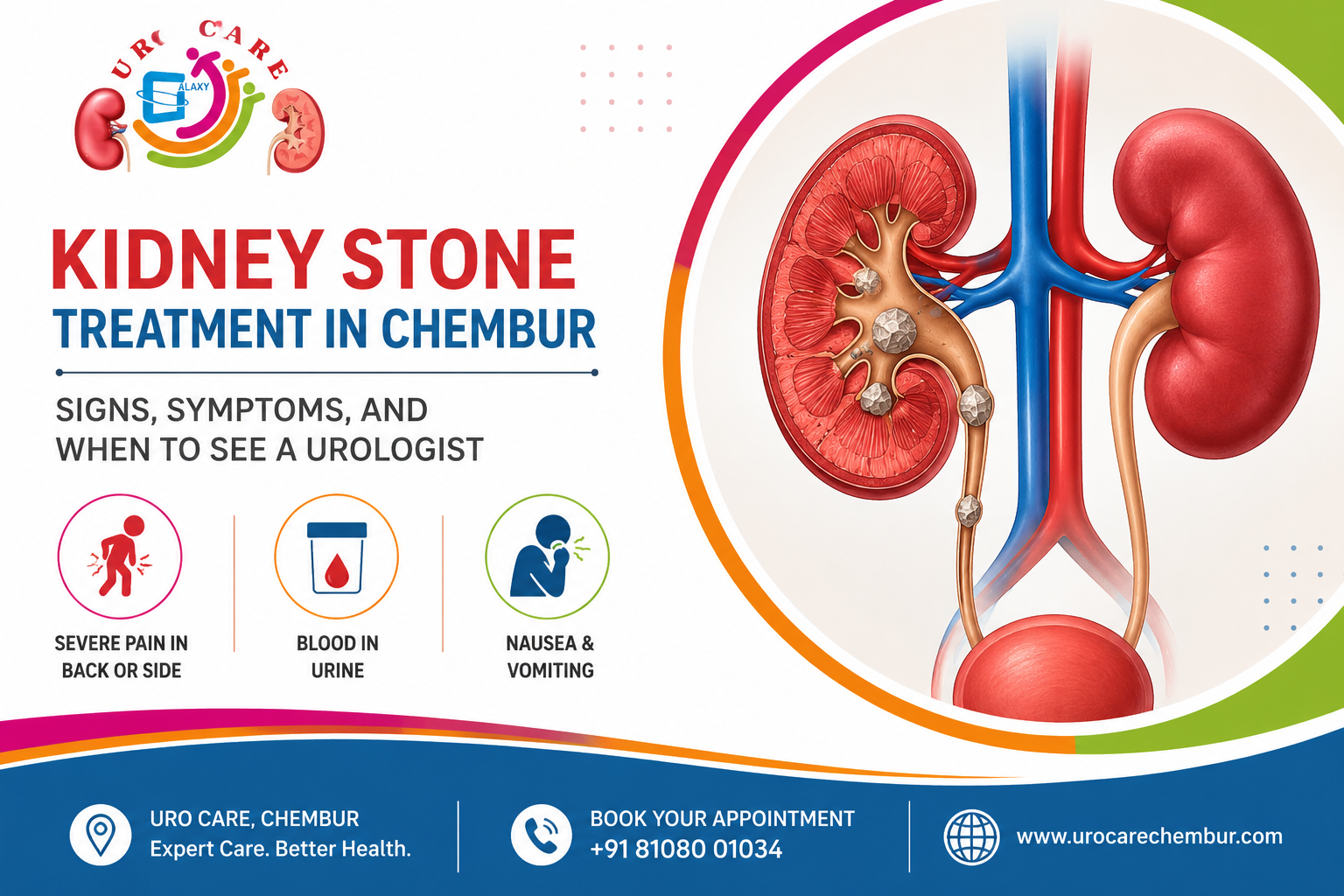
Inside the kidneys, minerals and salts carried in urine can sometimes clump together and harden into what we call kidney stones. This condition ranks among the more frequent urinary tract issues people encounter. When left unmanaged, the pain can become debilitating. Occasionally, a small stone will pass through the body without intervention, but larger ones usually require a doctor’s involvement to keep complications at bay. Anyone dealing with recurring or worsening pain should book time with a Kidney Stone specialist in Chembur, since an early, accurate diagnosis makes all the difference in choosing the right path forward.
Below, you’ll find the symptoms to watch for, the range of treatments available, and the point at which seeing a urologist becomes necessary rather than optional.
What Are the Common Signs and Symptoms of Kidney Stones?
The size of a stone and exactly where it sits in the urinary system shape how noticeable it becomes. Some stay silent for a long time before making themselves known. Signs to keep an eye on include:
- Sudden, sharp pain along the back, side, or lower abdomen
- Discomfort that radiates outward toward the groin
- A stinging or burning feeling during urination
- Blood appearing in the urine
- An unusually frequent need to urinate
- Bouts of nausea or vomiting
- Chills paired with fever, often a sign infection has set in
Acting quickly on these symptoms and pursuing Kidney Stone Treatment In Chembur without delay helps keep the situation from spiralling into something more serious.
What Causes Kidney Stones?
A handful of lifestyle and health-related factors tend to push up the odds of stone formation: not getting enough water day to day, a diet leaning heavily on salt or protein, stones running in the family, being overweight, underlying metabolic issues, and urinary infections that show up again and again. Shifting toward healthier daily habits, alongside regular check-ins with a specialist, meaningfully lowers the chance of stones returning.
When Should You See a Urologist?
Some discomfort will settle down with rest, fluids, and basic pain relief, but certain warning signs call for prompt medical attention rather than a wait-and-see approach. Get to a urologist if you’re dealing with:
- Pain that’s severe and shows no sign of easing
- Blood showing up in your urine
- An inability to urinate properly
- Nausea or vomiting that keeps recurring
- Fever combined with chills
- Stones that seem to keep coming back
Addressing the problem early reduces the odds of a blocked urinary tract or lasting kidney damage. A trained Kidney Stone specialist in Chembur can lay out a treatment path tailored to your case, which might involve surgical removal in more advanced situations.
Diagnosis of Kidney Stones
Nailing down a stone’s exact size and position typically involves a mix of the following:
- A hands-on physical exam
- Lab analysis of a urine sample
- Blood work
- Ultrasound imaging
- A CT scan
- An X-ray, when necessary
These findings together give your specialist what’s needed to map out an effective treatment plan.
Treatment Options for Kidney Stones
Which treatment makes sense comes down to the stone’s size, its location, and how much distress it’s causing.
Conservative Management: For stones under roughly 4–5 mm, the body can often pass them without surgical help, particularly with increased fluid intake, medication for pain, and drugs that ease tension in the ureter to help the stone move along. Tackling things at this early stage tends to bring faster relief and keeps the stone from enlarging or turning into a bigger complication.
Minimally Invasive Procedures: For stones too large to pass on their own, doctors typically turn to one of these:
- Extracorporeal Shock Wave Lithotripsy (ESWL) – shock waves aimed from outside the body break the stone into smaller pieces that can then pass naturally; best suited to small or medium stones
- Ureteroscopy (URS) with laser lithotripsy – a slim scope travels through the urinary tract to reach the stone directly, where a laser breaks it apart
- Percutaneous Nephrolithotomy (PCNL) – reserved for larger or more complicated stones, this involves a small back incision through which the stone is removed
Your urologist will factor in the stone’s size, its position, and your broader health picture before recommending which of these suits you.
What Is the Kidney Stone Treatment Cost In Chembur?
There’s no single fixed price costs shift based on how many stones are involved and their size, which procedure ends up being needed, the extent of diagnostic testing, the hospital’s infrastructure, the surgeon’s experience level, and how long you’re admitted. Choosing a provider on price alone isn’t the wisest move; what matters more is finding an experienced specialist who delivers dependable care. Raising the topic of cost directly during your consultation gives you a realistic sense of what to expect and helps with planning.
Tips to Prevent Kidney Stones
A handful of steady habits can go a long way toward lowering your odds of stones returning:
- Make a habit of drinking water consistently through the day
- Cut back on how much salt you’re consuming
- Cut down on sugary drinks
- Lean your meals toward fruits and vegetables
- Keep your weight within a healthy range
- Follow any dietary guidance your doctor has given, particularly if stones have been an issue before
Checking in regularly with your urologist helps track your kidney health over the long term.
Why Timely Treatment Matters
Putting off treatment gives a kidney stone room to cause worsening pain, block the urinary tract, spark infections, or damage the kidney over time. Getting help as soon as symptoms surface speeds up recovery and lowers the odds of complications piling up. Having a sense of the expected cost beforehand also means decisions can be made calmly rather than under pressure.
Final Thoughts
Most kidney stones respond well to treatment, especially when caught in the early stages. Ongoing pain, blood in the urine, or trouble urinating are signals worth acting on rather than ignoring. An experienced urologist such as Dr. Swapnil Tople can offer an accurate diagnosis paired with a treatment plan suited to your needs. Moving forward with Kidney Stone Treatment In Chembur without delay does more than ease pain it safeguards your kidney health for years to come. It’s also worth raising the topic of treatment cost with Dr Swapnil Tople early on so you can proceed with a clear plan in mind.
FAQs
- What are the first signs of kidney stones?
Early warning signs typically show up as sharp, cramping pain along the back or side that can extend toward the lower abdomen and groin, often paired with painful urination and blood showing up in the urine. Nausea, vomiting, or an increased urge to urinate are also common. If an infection develops alongside the stone, fever and chills tend to follow. - When should I consult a kidney stone specialist?
A visit is warranted when pain becomes severe or doesn’t ease with rest and home remedies, when blood shows up in the urine, or when urinating becomes difficult. Fever with chills, or nausea severe enough to interfere with staying hydrated, are also reasons to get checked promptly, as is a pattern of stones recurring over time. - Is surgery necessary for every kidney stone?
Not at all. Stones smaller than roughly 4-5 mm often pass on their own with enough fluids, pain relief, and medication that relaxes the ureter. Larger stones, or ones causing a blockage or infection, are more likely to need a minimally invasive procedure such as laser lithotripsy, ureteroscopy, ESWL, or PCNL. - What affects the cost of treatment?
Several variables come into play the number and size of the stones, which procedure is required, the diagnostic workup involved, the hospital’s facilities, the surgeon’s level of expertise, and how long the hospital stay or recovery period runs. - Can kidney stones be prevented?
In many cases, yes. Staying consistently hydrated, cutting back on salt and animal protein, limiting sugary beverages, and maintaining a healthy weight all help. For anyone with a history of stones, sticking to a doctor’s personalised dietary recommendations and keeping up with regular follow-ups can further cut the risk of new stones forming.